It is essential that not only engineers and designers are aware of these revisions, but for architects, property managers, contractors and tenants to be informed as well. This article highlights five of the most impactful changes in the 2026 NEC and explains what they mean for commercial tenant improvement projects.

The 5 Most Critical Changes to the 2026 National Electrical Code
October 12, 2026
Tenant improvement electrical projects in commercial buildings can already face short deadlines, low cost margins, and strict constraints. Now, new revisions featured in the 2026 National Electrical Code® (NEC) pose additional threats to critical planning, design and project cost that must be accounted for. While generally feasible, ignoring these revisions can cause project delays and additional budget issues.
1. Expanded Arc-Flash Label Requirements - NEC 110.16
Previously, most new disconnects, panels, and other similar electrical equipment required basic arc-flash labeling to convey the danger of vaporization explosion hazards should the equipment fault. New feeder or service fed equipment was required to display generic labels from the manufacturer, only requiring custom labels on equipment that exceeded a certain threshold. In the 2026 NEC, this threshold has been removed, now requiring an arc-flash study to be conducted in order to obtain the necessary data. Arc-flash studies are typically done in accordance with NFPA 70E, the standard for electrical safety in the workplace, published by the National Fire Protection Association, and can be quite extensive. It’s important to note that these arc-flash labels are not limited to new equipment and may be required for modified and relocated equipment as well.
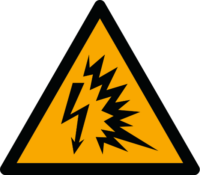
Some of the critical implications to this revision include:
- Requiring this study, performed by the manufacturer, engineer, or contractor, adds fees and increases project costs.
- Conducting the arc-flash study takes time and is typically performed during construction. The study must be planned for and included in the project completion timeline.
- Engineers must gather the required data or make a note in the design for the arc-flash study to be completed.
2. Load Calculations - NEC 120 & 424.5
Under the 2026 NEC, a large reformat moved standard load calculations to a new section (NEC Section 120). This relocation caused many changes, some that are related to residential projects, which will not be covered in this article, but some that are critical to commercial change as well.
The primary commercial change affects heat loads. Under NEC Section 120, it is clarified that heat and other continuous loads are not to be factored into the project’s base load. However, other applicable continuous load factors still must be considered when using the base load to size services and feeders.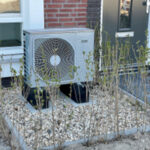
Previously, heat loads were factored at 100% for services, panels, and feeders. Now, fixed electric space-heating is considered a continuous load for these sizing requirements, changing the loads to be calculated at 125%. Heat loads may be considered fixed electric heating along with other loads such as snow melt when applicable. This calculation change may have significant impact considering that many codes now require the use of electric heat instead of natural gas.
Critical Implications:
- It is especially important to pay attention to load calculations in existing buildings and monitor the potential impacts on existing or modified equipment. Engineers should ensure proper load calculations are included in the design.
- Larger heating loads create additional equipment costs due to the increase in load and infrastructure.
3. Panel Access/Egress - NEC 110.26
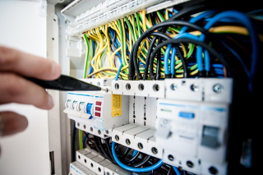
In the 2023 NEC, it was previously added that egress from electrical rooms and the space in front of electrical equipment, the working space, had to account for 24” when equipment doors were open. This update required accounting for the swing direction and door size on panels when open for placement in electrical rooms.
Now, the 2026 NEC has further edited this requirement to be measured when panels are open specifically to 90 degrees. The potential reduction in opening angle can and will affect electrical equipment layouts, as a door opened at only 90 degrees typically impedes movement more. Monitoring the opening angle will be critical within electrical rooms that were designed before this revision was published.
Critical Implications:
- Larger or additional electrical rooms may mean the loss of rentable square footage in the building.
- Engineers and designers must dedicate more space for electrical rooms and be sure to account for door swing in electrical room layouts.
4. Feeder-Fed Buildings & Disconnects - NEC 225.31
In previous versions of the NEC, buildings that received electrical service from another structure required disconnecting the power source at the second structure, nearest to the building entry. The construction of the first structure would often create a gray area, determining if certain service equipment setups that were not attached to the building would be considered another separate structure.
The 2026 NEC has changed these guidelines, providing more allowance for the location of the second disconnecting means. The code now allows the second means to be placed on or within sight, which per the code is either 50’ or clearly visible. If the disconnecting means supplying the building electricity is located on a service equipment structure within sight, it may be able to satisfy the building disconnect requirement as well. This situation happens often in existing commercial structures where exterior services are modified or relocated.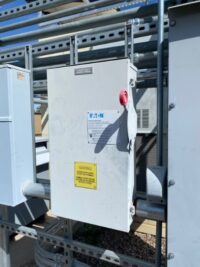
The key takeaway from this change is not to place a building disconnecting means as far away as possible but instead, mount it to the building, except in instances like the presence of full glass walls, where it is impractical or impossible to do so. A service structure located only feet away will have no gray area if another building mounted feeder disconnect is still required.
Critical Implications:
- Costs may be reduced with the potential for fewer disconnecting means.
- Many projects, like buildings with all windows, are difficult to attach large disconnecting means. This update will allow for more flexibility in planning and design.
5. Electrical Vehicle Supply Equipment Emergency Power Off - NEC 625.43
 Under older versions of the NEC, Electrical Vehicle Supply Equipment (EVSE) or EV Chargers, may or may not have required an exterior disconnect. In most current cases, EV Charger pedestals in parking lots do not have any additional within-sight disconnecting means. The new 2026 NEC has been revised to now require emergency power off capability.
This new capability must be located between 20-100’ and within-sight of the charger, which means it can’t be on or near the charger itself. The goal is to allow shutoff of charger power in the event of a hazard, like a fire, at the charger or vehicle itself. There are many ways to achieve this, but some examples include:
- Emergency Power Off buttons tied to shunt breakers/disconnect or the chargers themselves.
- Power Disconnects for the EVSE placed in the required distances.
Critical Implications:
- This capability will add costs to projects as most installations do not already have disconnects.
- Engineers must plan for this new capability while designing, especially in cases where an alarm is necessary. For example, if the charger pedestal is located near a school, it is likely students may hit the button, sounding an alarm and causing a nuisance in the area. Problems like these can be prevented with proper planning and consideration.
Conclusion
Understanding new code changes is always important within the architecture, engineering, and construction industry. This article has highlighted five of the most critical changes in the 2026 NEC for commercial tenant improvement projects and their impacts on cost, planning, and design.
While the 2026 NEC introduces changes in approach, these updates are intended to improve the safety of electrical installations. Above all, compliance remains key. As the 2026 NEC is adopted throughout the country, these changes will help create safer and more reliable electrical systems.
For the full text and additional details, the 2026 NEC is available through the NFPA’s free online access portal.











Contact us to learn more.
We’re excited to meet you. Complete this simple form to connect with us today.
"*" indicates required fields