The Primera team highlights the multifaceted challenges shaping today’s aviation market in response to a question we posed to our engineers about the most complex and pressing issues facing airport projects. From aging infrastructure and material shortages to climate resilience, digital innovation, and fire safety, their perspectives underscore how essential engineering is to the future of aviation.

7 Engineering Perspectives on Challenges Facing Airport Projects
September 5, 2025
As global air travel continues to surge, airport infrastructure faces mounting pressure to evolve—faster, smarter, and more sustainably. We asked a group of our engineers and aviation experts from across the Country to weigh in on the most complex and pressing issues shaping airport projects today.

Charlotte, NC
Aviation Engineer
|
|
|
| “A major engineering challenge in airport projects today is the push to expand quickly, adding gates, terminals, and capacity to meet rising demand. Profitability often takes priority over upgrading aging infrastructure, leading to rushed planning and design issues. Material shortages, especially with key items like reinforced concrete pipe, can delay timelines and trigger last-minute design changes that impact the entire project.”
Brian DeMeyer, PE, Aviation Engineer IV |

Atlanta, GA
Business Development
“Airport projects today demand a balance of resilience, flexibility, and sustainability. Rising passenger numbers call for smarter design and efficient space use. There’s a strong push for durable, low-carbon materials to meet environmental goals, while designs must also handle climate extremes and evolving safety risks. With future tech like eVTOLs emerging, adaptable digital infrastructure is key, all while construction crews operate safely in nonstop, 24/7 environments.”
Al Clark, Jr., VP, Business Development

Denver, CO
Sr. Aviation Group Manager
“Airports are rolling out new tech, but it comes with challenges. Bluetooth mesh networks are being introduced to track passenger movement in real time, helping airport operations optimize flow. There’s also a renewed push for large ramp information screens and self-parking aircraft systems at gates, aiming to streamline ground operations and improve efficiency.
On the electrical side, sourcing service equipment is tough with lead times now stretching past 18 months. And looking ahead, utility power is shaping up to be a major issue. With the rise of EVs for ground operations and personal vehicle charging, existing infrastructure isn’t built to handle the growing demand.”
James Enright, PE, LEED AP BD+C, Sr. Aviation Group Manager, Buildings

Chicago, IL
Aviation Engineer
“A large portion of major airports lack modern infrastructure. Trying to upgrade these facilities while keeping them fully operational is a real challenge. It’s like renovating a house while still living in it. Projects have to be carefully phased to avoid disrupting daily operations, and even small changes can have a big impact on passenger flow, safety, and scheduling.”
Jarrett Stichler, PE, Aviation Engineer III

St. Louis, MO
Project Delivery Manager
“In the fire protection realm, we are eliminating AFFF (aqueous film-forming foam) due to the PFAS (polyflouroalkyl substances) which pose health and environmental risks. We are also seeing more EV tugs which have inherent fire risks, including potential for thermal runaway of the lithium-ion batteries.”
Amanda Beck Larkin, PE, CET, CFPS, Project Delivery Department Manager, Buildings

Chicago, IL
Aviation Engineer
“A major challenge is modernizing outdated systems that are difficult to maintain and hinder efficient air traffic flow. Innovation is critical. Philadelphia International Airport (PHL), for example, uses GIS modeling to streamline utility identification and reduce design conflicts. Another key trend is the use of CMAR (Construction Manager at Risk), which helps manage costs and schedules by involving contractors early. These strategies are becoming essential as airports upgrade infrastructure while keeping operations on track.”
Kris Salvatera, PE, Aviation Engineer III

Chicago, IL
Lighting Team Lead
“Lead times, pricing, value engineering, integration with existing systems, and getting everyone aligned on design ideas all play a big role. And often, the cheapest option isn’t actually the best solution in the long run.”
Renata Pajerska, LC, CLD, LEED AP BD+C, Lighting Team Lead
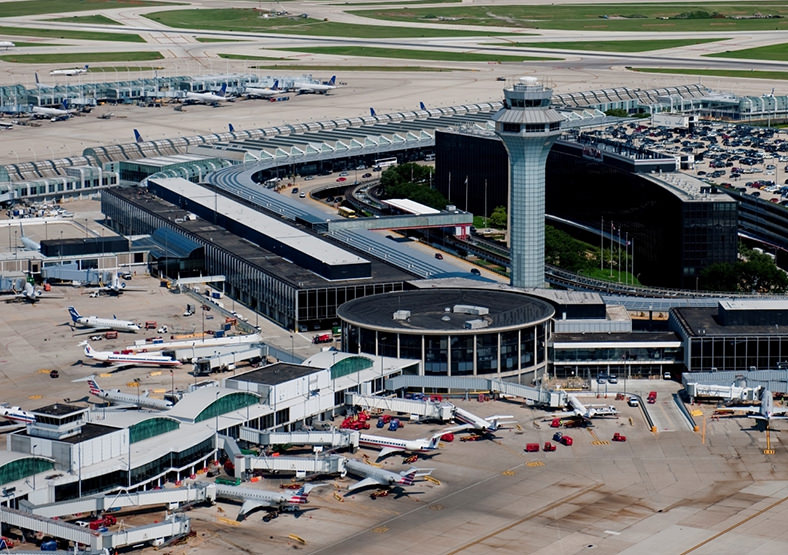
DEN Concourse A and B Photography © Michael Robinson
Related News








Contact us to learn more.
We’re excited to meet you. Complete this simple form to connect with us today.
"*" indicates required fields