What Separates Good Engineers from Great Ones

May 25, 2026

Ken Panucci, Sr. Vice President and Buildings Division Manager, shares insights from nearly 40 years of experience on the skills and habits that help engineers move from good to truly great.

I’ve had the chance to work alongside some incredibly talented people in the architecture, engineering and construction (AEC) industry over the years. The level of training available, through industry and professional associations, manufacturers, and within our own firms, is outstanding, and I’ve seen many engineers grow and thrive because of it. Mentorship is strong in our field, and performance feedback continues to improve, creating real opportunities for young professionals to develop.

During a recent advisory board meeting for the University of Illinois at Chicago’s College of Engineering, one of the members suggested that professors should teach “what makes a great engineer.” That got me thinking: how does someone go from being a good engineer to a great one?

With nearly 40 years in design and construction engineering and over two decades leading teams and projects, I’ve learned that technical knowledge alone isn’t what sets people apart, it’s how you apply it, how you show up, and how you work with others. Rather than a definitive list, these are the 10 skills and habits I’ve personally seen make the biggest difference in helping engineers grow their careers in this industry.

 

Ken Panucci, together with members of our Executive Management Team, presenting at Primera’s Annual Employee Meeting earlier this year.


1. Ownership Beyond the Job Description

Great engineers do not stop at “my part is done.” They own outcomes, not just tasks. This responsibility requires owning the issues not only during design, but also through construction, and ultimately by understanding the project’s impact on users. Going from good to great means fixing problems that no one assigned to you and caring if the solution works in the application. I remember working on a healthcare project which was experiencing all kinds of HVAC test and balance anomalies related to installation issues. The urgent nature of the project schedule to receive occupancy prompted us to conduct field inspections, which revealed that some of the wiring was incomplete or landed incorrectly, causing dampers to malfunction. Once fixed, the balancing went smoothly. Taking responsibility of issues throughout each stage helped me to discover necessary solutions and successfully keep the project on track.

2. Systems Thinking

Great engineers understand how their design impacts other disciplines. They spend as much time coordinating with other team members as they do working on their design approach. Great engineers anticipate ripple effects across disciplines, users, and time. Designing with lifecycle, maintenance and failure modes in mind and flexible designing to ensure a system is user friendly for the operating and maintenance teams are design techniques that set great engineers apart from the good ones. On a recent project, a great electrical engineer asked the client if they planned to use the facility as a community cooling center in the peak of summer should the power be lost. The client thought this was a great value-add to the project and asked that we incorporate a generator to allow local community members to stay cool at the facility until power was restored to their homes.

3. Intellectual Humility

Great engineers are confident and teachable. They change their minds when evidence is presented. Good engineers become great engineers when they learn how to say, “I’m sorry,” “I was wrong,” “I don’t know,” and “I need help.”  A great engineer will welcome better ideas, even from junior teammates. Remember, junior staff do not necessarily act the way they are told by their managers, but rather by the way they see their mentors behave.

Young professionals learn to understand by being involved, not by being told. A great engineer will understand and take advantage of this concept. During a project, a junior plumbing engineer suggested an alternative piping layout that reduced pressure loss. The senior engineer reviewed, agreed, and adopted the layout, resulting in reduced pipe sizing, lower pump energy, and, most importantly, a confident junior engineer. Adopting this suggestion may seem trivial, but it made a profound impact on the young engineer.

4. Judgement Under Uncertainty

It is important to know when your analysis is good enough. As consultants, we have challenging profit margins and tend to over-produce a deliverable or over-study a problem. Sorry to say, but sometimes perfection is wasteful. A great engineer will make progress despite ambiguity. A great engineer is nimble and will understand how to evaluate tradeoffs and how to efficiently adjust plans as new information arrives. We find plenty of good judgement examples in the HVAC scope of work. As the project timeline slips away, the mechanical engineer’s necessary input for completing the load calculation and equipment sizing is delayed. Because the building room sizes and layouts were time sensitive for early program development, the engineer used their vast judgement to estimate loads and equipment performance requirements, allowing for program estimation of room sizes and adjacencies. Yes, our industry is very litigious, and our contracts require proper design inputs and thorough calculations, but we can use our judgement to help the other disciplines plan ahead of the formal completion of our contracted scope of work.

5. Empathy for Users and Teammates

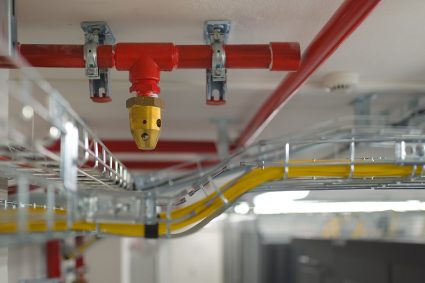
In this context, empathy can be defined as being sure that designs consider the human factors. Realize that you design for real humans such as operators, facility engineers, and occupants. Examples of design empathy include simplifying complex systems and designing for safety and usability. I work with a great fire protection engineer and as a rule, their construction documents require metal coupons to be affixed to the piping at all tapped branch connections. These coupons offer a helpful, user-friendly way to prove that the system is live to the inspector and facility engineers.

6. Clear and Honest Communication

A great engineer can explain complex ideas without inserting their ego. They can tailor communication to the audience. Communications need to be concise and engineers need to be transparent regarding costs, aesthetics, alternatives, risks, longevity, and prior experiences. Project teams that I worked with in healthcare included “no surprises” as part of their mission statement. This phrase ensures owners have the necessary details, provided in plain language, to make an educated decision. A client may not realize the impact of cost-cutting measures associated with the building systems, but when you explain to them the impact of removing the particular design feature will have on their staff, the value is more clearly understood.

7. Bias Toward Learning

Great engineers do not rely on past success. They continuously sharpen their technical expertise and sources of knowledge. Of course, we are always attending learning events, taking accredited coursework, and learning from our manufacturer representatives about new products.

Learning also includes seeking feedback after successes and failures and learning adjacent disciplines, not just your own niche. A great mechanical engineer always ensures that electrical panels have spare capacity to pick up their digital control power requirements. Great fire protection engineers always ensure that their design meets the needs of First Responders. Great engineers adapt a bias toward learning.

8. Resilience and Professional Grit

Engineering is full of constraints, setbacks, and compromise. Great engineers persist without becoming cynical. This resilience includes staying constructive under pressure and recovering quickly from mistakes. I encountered a great mechanical engineer who stressed the importance of floor-to-floor dimensions, allowing for system components to fit while being accessible for maintenance. These requirements were all communicated during early stages of the project. However, even the based laid plans are not always enough because the project was forced to cut these dimensions to bring the project construction cost under budget. This cut resulted in significant coordination effort, trial and error drawings, and trimmed the project profit margin. A great engineer looks at this as an opportunity to support the struggling project team and client, not as a setback or failure.

9. Principle-Based Decision Making

All engineers must rely on engineering principles, standards, and ethics, never settling on just habit or convenience.  A great engineer will defend sound engineering decisions respectfully and will know when and why to push back, using a great deal of tact, empathy, and humility. Great electrical engineers will resist under sizing feeders to save cost, referencing code and reliability principles, resulting in a safe, compliant system with fewer operational risks.

10. Quiet Leadership

A great engineer is a great leader. They make others better without needing authority or taking credit. Mentoring comes naturally to these people who will always set ambitious standards by example. A great engineer mentors younger staff during coordination meetings, letting them present while offering guidance privately, resulting in stronger team capability and confidence without ego-driven leadership. A great leader will recognize a high potential junior engineer and give them an abundance of assignments, encouraging them to embrace the challenge, push their limits and leave their comfort zone.

Ultimately, a good engineer delivers correct solutions but a great engineer creates lasting outcomes, elevates those around them, and consistently makes sound decisions when it matters most. Which would you rather be?

Contact us to learn more.

We’re excited to meet you. Complete this simple form to connect with us today.

Chicago (Headquarters)
(312) 606-0910 View All Locations

"*" indicates required fields

This field is for validation purposes and should be left unchanged.