The International Energy Conservation Code (IECC) is a model of minimum standards for energy-efficient building design and construction. The code establishes requirements based on the continuous developments in building materials, techniques, and technologies. The latest edition of the code, IECC 2024, builds on the existing IECC 2021, incorporating new technologies and best practices that continue the trend toward even greater efficiency. In this article, Lance Trares, Mechanical Engineer II at Primera Engineers, analyzes several of the major code updates by section, providing deeper insights on energy efficient engineering and design. To see all updates made to IECC 2021, please refer to the official IECC 2024.
What’s New in the IECC 2024?
January 13, 2026
Taking a look at the updated International Energy Conservation Code.
Building Envelope
The building envelope is a vital barrier that separates the interior air and moisture conditions of a building from the outdoor environment, maintaining comfort for occupants and overall energy efficiency. In Section C402, IECC 2024 reveals the updated thermal resistance requirements increasing insulation standards for thermal envelope assemblies. The goal of these standards is to make envelope assemblies like roofs, walls, floors, and fenestrations, more resistant to heat flow, improving efficiency and reducing heating/cooling costs.
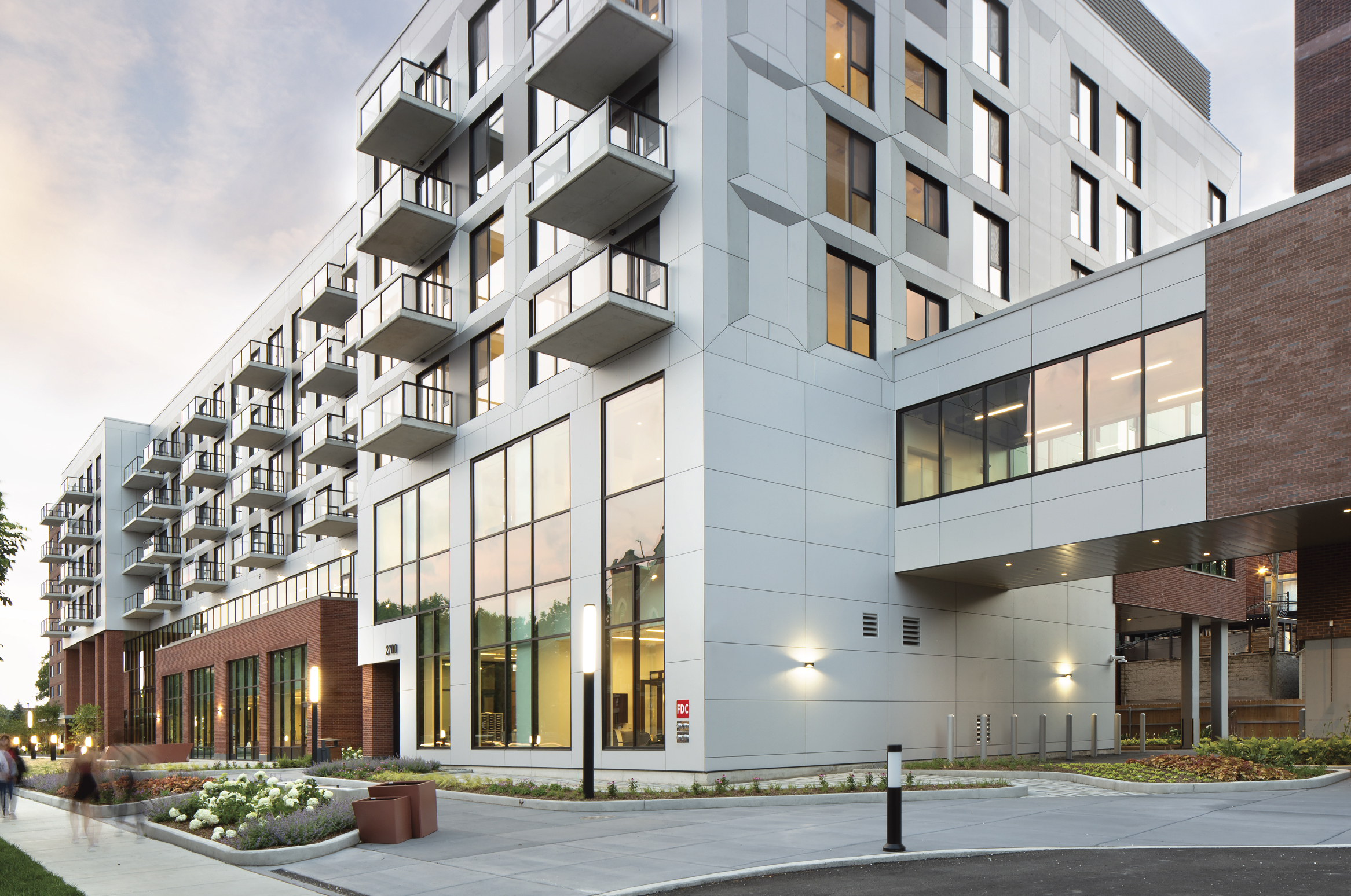
The main issue addressed under the Building Envelope section of IECC 2024 is thermal bridges in above-grade walls. A thermal bridge, as defined in IECC 2024, is “an element or interface of elements that has higher thermal conductivity than the surrounding building thermal envelope, which creates a path of least resistance for heat transfer.” Thermal bridges significantly reduce the effectiveness of the thermal envelope and therefore must be reduced to provide energy-efficient buildings. Section C402.7 of IECC 2024 sets forth requirements that design teams must comply with to minimize the effects seen among common thermal bridges such as balconies and floor decks, cladding supports, structural beams and columns, vertical fenestration, and parapets. These requirements govern how insulation should be applied, what thermal properties must be met, when the thermal envelope can be broken, and other similar design considerations.
Mechanical Systems
Heating, ventilation, and air-conditioning (HVAC) systems use the most building energy, so it’s natural that a large portion of the code updates are meant to increase HVAC equipment energy efficiency. In IECC 2024, minimum equipment efficiencies have been updated for commonly used heating and cooling equipment to reflect modern technology and systems. A few examples include boilers, chillers, air conditioners, and heat pumps. These efficiencies, as in previous years, can be found in the tables in Section C403.3.2.
With regards to boilers, IECC 2024 seeks to take advantage of the modern efficiency, reliability, and availability of condensing boilers. The new code requires that boiler plants operating between 1,000 MBH – 10,000 MBH have a minimum thermal efficiency of 90%. To ensure the condensing nature of the boilers is utilized, the code mandates that the boiler plants operate under design conditions resulting in a maximum return water temperature of 120°F.
Several updates have also been made to ensure energy goals are met in renovation projects. The first major renovation update occurs when there is a change in occupancy classification. When this occurs, the design team must confirm the new occupancy classification’s energy intensity rank per Section C505.2.2. If the new classification results in an equal or increased energy use intensity rank, all mechanical systems serving the renovated building or space must comply with Section C403.
Oftentimes, the existing mechanical equipment curbs aren’t raised high enough off the roof to add the insulation around them. The equipment must then be removed to install higher curbs, before being reinstalled. To counteract this redundancy, all new rooftop mechanical equipment installed on roofs noncompliant with IECC 2024 insulation requirements must be installed on higher curbs to accommodate future insulation addition. These heights vary by climate zones, with Illinois (Zone 5) being at 17 inches.
Electrical Power and Metering
With buildings continuously maximizing their energy efficiency, it becomes even more important to accurately track energy usage. IECC 2024 takes this into account, now mandating that buildings with a gross-conditioned floor area of over 10,000 square feet monitor their energy usage per Section C405.13. This is a substantial difference from IECC 2021, which sets the threshold at 25,000 square feet.
IECC 2024 also brings more structure for incorporating renewable energy into buildings. Section C405.15 is introduced for this reason, as it sets forth renewable energy requirements that buildings must abide by to comply with the code. Buildings capable of producing sufficient on-site energy per Section C405.15.1 must do so. Otherwise, the building must achieve renewable energy goals with off-site technology per Section C405.15.2. It’s important to note that Section C405.15 applies to additions made to existing buildings. However, it only applies to the new addition section of the building per Section C502.3.8.
Lighting Systems
Similar to the mechanical systems described above, lighting systems see advancements in efficiency and control as new technologies have developed. IECC 2024 develops several new lighting controls requirements to capitalize on these advancements. First, four new areas now require occupant sensor controls: computer rooms (data center), medical supply rooms in healthcare facilities, laundry/washing areas, and telemedicine rooms in healthcare facilities.
Additionally, further development on dimming controls can be seen in IECC 2024 Section C405.2.3.1. Dimming controls must now feature manual controls that allow the user to continuously dim the lights from 100% to 10% or less of the full output. The corresponding IECC 2021 manual control requirements were much more relaxed, allowing different dimming methods like stepped dimming instead of continuous. The new requirement is only exempt where high-end trim lighting controls, as defined in Section C405.2.3.1, are provided.
Effects of the previously mentioned advancements and controls updates can be seen in Section C405.3.2 with updated interior lighting power allowances. Generally, the allowances have decreased from IECC 2021. These changes follow the general trend typically seen between IECC releases.
With these updates, IECC 2024 also brings new requirements to lighting work in renovations. Previously, interior lighting alterations that replaced less than 10% of luminaires in a space did not have to abide by Sections C405.2, C405.3 and C408.8 if they did not increase the installed interior lighting power. This exemption is now removed, and any new interior lighting system replacements must follow sections C405.2, C405.3 and C408.8.
Plumbing
Although plumbing equipment typically uses a fraction of the energy that HVAC equipment and lighting use in commercial buildings, each new IECC still considers the latest innovations in plumbing when updating the code. These updates can be seen with Table C404.2, as it lists the updated performance requirements for water-heating equipment. The table further differentiates certain types of water heaters as well, specifically splitting up electric water heaters into separate sub-categories.
Another major plumbing change can be seen in Section C404.6.1. On top of the previous requirements relating to circulation systems, IECC 2024 takes another step in improving system control. The code now specifies that circulation pumps serving multiple risers or piping zones, must be coupled with self-actuating thermostatic valves or other capable equipment to automatically balance the flow rates. This operation lends itself to using efficient electronically commutated motor (ECM) pumps in tandem with temperature dependent, wax-style balancing valves.
Commissioning
To ensure the IECC requirements are properly implemented, Section C408 outlines the necessary maintenance information and required system commissioning. Section C408.2, specifically, is used to determine what projects require commissioning. IECC 2021 required that projects with over 480 MBH cooling or over 600 MBH combined space-heating and service water-heating capacity be commissioned. IECC 2024 now requires buildings with over 10,000 square feet of gross-conditioned floor area or 960 MBH of combined space-heating, cooling, and service water-heating capacity be commissioned. This update will require significantly more buildings to use full commissioning services in order to comply.
Commissioning requirements relating to high-end trim controls and demand-responsive lighting controls have been included in Section C408.3 to keep up with modern lighting systems. These sections outline the necessary procedures to be performed and the required information to properly commission these controls.
Illinois Stretch Energy Code
Additional Code Updates
When a State wants to target higher energy savings than the base IECC will produce, they’ll often write a stretch code. A stretch code is a version of the IECC that features additional provisions to better align with the State’s goals. The 2023 Illinois Stretch Energy Code is based on the IECC 2024 and features a few key provisions.
To build on the building envelope updates discussed above in the IECC 2024, Illinois has elected to reduce energy loss by introducing limits on fenestrations. The area of East-facing and West-facing fenestrations must not exceed 25% of the respective face’s total area. Exceptions can be applied for significant exterior shading or sufficient fenestration solar heat gain coefficients. Alterations and additions with no increase in vertical fenestration area are not required to abide by this provision either.
With continual increases in demand for energy, especially from data center usage, provisions have been made to protect buildings from outages. To address potential energy shortages associated with extreme weather or grid issues, the Illinois Stretch Energy Code outlines demand response capabilities that must be met by nonexempt buildings. Demand response programs work by communicating a building’s current need for energy to other participating buildings. When a building needs energy and the grid cannot supply enough, the other buildings reduce their energy use to ensure all buildings can function. Demand response controls must be incorporated into electric space heating, water heating, cooling, and lighting.
Additional provisions are centered around the idea of buildings being electric-ready. Section C405.14 incorporates this by mandating electric vehicle (EV) parking infrastructure be installed in parking facilities. This includes both EV parking equipment installations and EV parking readiness. The breakdown of required EV spaces and the required infrastructure are determined by building occupancy group type. These breakdowns are shown in Table C405.14.1. Similarly, Section C405.16 mandates that new buildings must have an electrical energy storage system (ESS) installed or an ESS-ready area to accommodate future electrical storage.
Electrical readiness provisions are also specifically seen in buildings with group R-2 type occupancies. With these buildings, all fossil fuel furnaces with less than 225 MBH capacity and fossil fuel boilers with less than 300 MBH capacity must be provided with branch circuiting that is sized for future heat pump heating equipment. Similarly, fossil fuel water heaters with an input rating of 300 MBH or less shall be provided with branch circuiting sized for future electric water heaters. All other fossil fuel heating equipment or fossil fuel water heaters must be provided with an appropriately sized raceway for future electric space heating or water heating equipment. Similar requirements are introduced for non-commercial cooking equipment and clothing drying equipment. The details of these requirements can be found in Section C405.18 of the Illinois Stretch Energy Code.
As with the IECC 2024, the Illinois Stretch Energy Code prescriptive compliance pathway requires a certain number of credits be obtained to ensure that energy savings are being met. With the stretch code, however, a significant change has been made to encourage the use of heat pumps for decarbonization. In buildings where the total heat pump space capacity is less than the heat load at design conditions, a multiplier of 1.25 must be applied to the credits required.
The Illinois Stretch Energy Code also adds two methods of demonstrating minimum code compliance. Similar to the Chicago Energy Transformation Code, the stretch code will allow a COMcheck Compliance Certificate as demonstration of compliance. The professional seal of a licensed architect or engineer can also serve as a demonstration of compliance. It is up to the associated local authority to determine what exact procedures of code enforcement are conducted. Specific “Above Code Programs” have also been added to the stretch code. Buildings that are certified in compliance with the Passive House Institute (PHI) or Passive House Institute U.S. (PHIUS) programs, or comply with Appendix CC, are considered compliant with the stretch code as long as they meet the mandatory requirements in Table C407.2(1).
Key Takeaways
To help building design teams quickly grasp the most significant updates, the following highlights summarize the latest code changes covered in this article:
- IECC 2024 introduces stricter standards for building envelope insulation, mechanical system efficiency, and lighting controls, driving greater energy savings across new and renovated buildings.
- Thermal bridging, HVAC upgrades, and advanced lighting controls are now more tightly regulated, requiring design teams to adopt new strategies and technologies.
- Metering and renewable energy requirements have expanded, with lower thresholds for energy monitoring and new mandates for on-site or off-site renewable energy integration.
- The Illinois Stretch Energy Code builds on IECC 2024, adding provisions for electric vehicle readiness, energy storage, demand response, and future electrification of building systems.
- Compliance pathways have evolved, with new options for demonstrating code compliance and incentives for adopting heat pumps and high-performance building certifications.
Conclusion
Understanding the IECC and associated stretch codes is incredibly important for building design teams. Not only does it ensure that buildings are compliant with mandated codes and regulations, but it also drives the creation of efficient, high-performing buildings that support the industry’s push toward decarbonization. The changes made to IECC 2024 represent a significant step forward in energy conservation and sustainability. Adopting these updates encourages professionals to position themselves and their organizations as leaders in innovation and environmental responsibility.









Contact us to learn more.
We’re excited to meet you. Complete this simple form to connect with us today.
"*" indicates required fields